




Blog
DIY HVAC Maintenance: Safe Tasks Homeowners Can Do
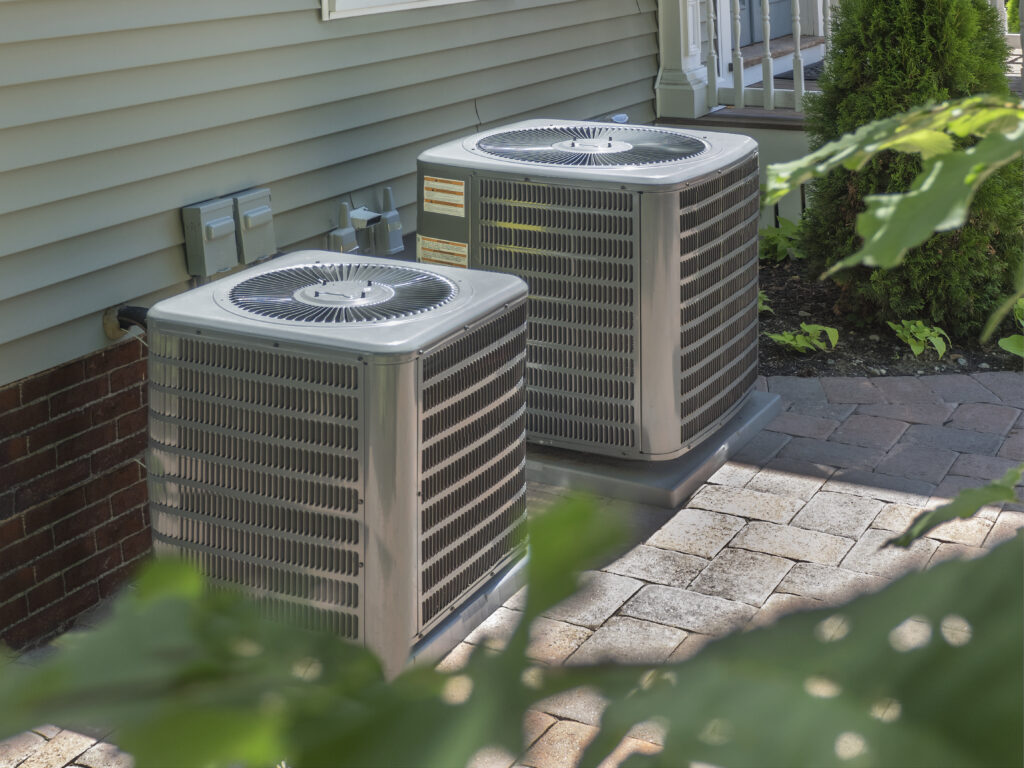
Taking care of your HVAC system doesn’t always require a service call. There are several safe, straightforward steps homeowners can handle on their own to keep heating and cooling equipment running smoothly. When done consistently, HVAC maintenance helps support airflow, comfort, and system reliability between professional visits.
For homeowners in New Albany, Southern Indiana, and across the Louisville, KY area, seasonal weather swings put real demand on HVAC systems. The goal of this guide is simple. Show you what you can do yourself, what you should not touch, and how those efforts work alongside professional maintenance from a local team that’s been serving Kentuckiana for decades.
Before You Start: Safety Basics for HVAC DIY
Before opening panels or cleaning around equipment, it’s important to understand where DIY stops and professional work begins.
Power, panels, and what not to touch
Always turn off power at the thermostat and breaker before doing any HVAC maintenance. Never remove sealed panels, access internal wiring, or adjust gas components. If a task requires opening the cabinet or using specialized tools, it’s no longer DIY.
Tools and supplies that make the job easier
Most DIY HVAC maintenance tasks only require basic items:
- A screwdriver
- A shop vacuum or household vacuum with attachments
- Mild soap and water
- Replacement air filters
- Gloves and a flashlight
If a task requires gauges, chemicals, leave it to a professional.
Monthly DIY Tasks to Keep Airflow Strong
These simple monthly steps form the foundation of home HVAC maintenance.
Choosing and replacing air filters the right way
Changing your HVAC filter is the most important DIY task you can do. A clogged filter restricts airflow and forces the system to work harder.
Check the filter monthly and replace it as needed. Make sure the airflow arrow on the filter frame points toward the system. If you’re unsure which filter to use, stick with the size recommended by your system manufacturer.
Vacuuming returns and supply registers
Dust and debris build up quickly on vents and grilles. Use a vacuum to clean return grilles and supply registers. This supports better airflow and helps keep dust from circulating through the home.
Clearing the area around indoor units
Indoor air handlers and furnaces need clear space to breathe. Keep storage, boxes, and cleaning supplies away from the unit. Even partial blockages can affect performance.
Seasonal Checklist: AC and Heating Prep
Seasonal AC and furnace maintenance DIY tasks help prepare your system for heavy use.
Spring: outdoor condenser cleanup and coil care
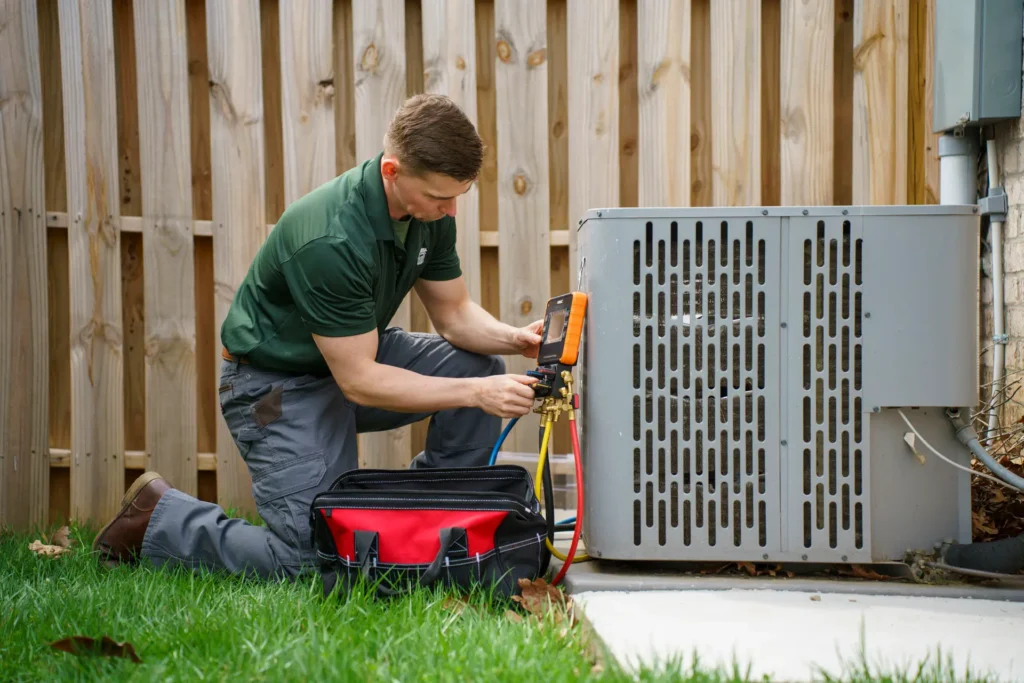
Before cooling season starts, inspect the outdoor condenser.
Remove leaves, grass, and debris from around the unit
Keep at least two feet of clearance on all sides
Gently rinse the exterior fins with a hose
Do not bend fins or use coil chemicals. Coil cleaning basics beyond surface rinsing should be handled by a professional.
Fall: furnace and air handler checks
Before heating season, confirm thermostat settings are correct and test the system early. Listen for unusual noises and make sure vents are open and unobstructed. If the system struggles to start or smells persist, schedule professional heating maintenance.
Condensate line checks and simple cleanouts
Your system’s condensate drain removes moisture. Check for visible clogs or standing water near the drain. A gentle flush with warm water can help keep it clear. If backups continue, stop and call a professional.
Improve Indoor Air Quality with Simple Upgrades
DIY steps can also support indoor air quality without replacing equipment.
Filter upgrades and when to consider whole-home solutions
Higher-quality filters can capture more dust and allergens, but they must still allow proper airflow. If dust or allergy symptoms persist, whole-home indoor air quality solutions may be worth discussing with a professional.
Controlling humidity for comfort and system health
Humidity control matters in both summer and winter. Use exhaust fans in kitchens and bathrooms and avoid blocking airflow. Persistent humidity issues often require professional evaluation.
Learn more about indoor air quality options if comfort issues continue.
When to Stop and Call a Professional
Knowing when not to DIY is just as important.
Performance red flags you shouldn’t DIY
Stop and schedule service if you notice:
- Weak airflow that doesn’t improve
- Unusual noises or vibrations
- Rising energy bills with no explanation
- Short cycling or inconsistent temperatures
What a pro tune-up includes and why it matters
Professional HVAC maintenance includes tasks homeowners shouldn’t attempt, such as refrigerant inspection, internal coil cleaning, and full safety testing. These services complement your DIY routine and help prevent breakdowns.
Professional maintenance handles the things DIY care can’t, especially when it comes to AC and heating systems.
Quick DIY HVAC Maintenance Checklist (Printable)
- Change HVAC filter
- Vacuum return and supply grilles
- Clear space around indoor unit
- Remove debris from outdoor condenser
- Rinse condenser exterior
- Check thermostat settings
- Inspect condensate drain
Keep this HVAC maintenance checklist handy and follow it monthly and seasonally.
Ready for Next Steps? Schedule Professional Maintenance
DIY HVAC maintenance keeps systems running smoother, but it doesn’t replace professional care. When homeowners combine safe DIY tasks with scheduled service, systems last longer and perform more consistently.
Greenwell has been serving New Albany, Southern Indiana, and Louisville, KY for over 30 years. And with the 30 Minute Guarantee, you’ll always get a call ahead before we arrive. If you’re ready to take the next step, schedule professional maintenance today. If you need emergency assistance, we also provide emergency HVAC repair for all of our Kentuckiana residents.
Schedule Online(502) 205-2482