




Geothermal Systems
Geothermal Heating & Cooling Installation & Repair in New Albany, IN
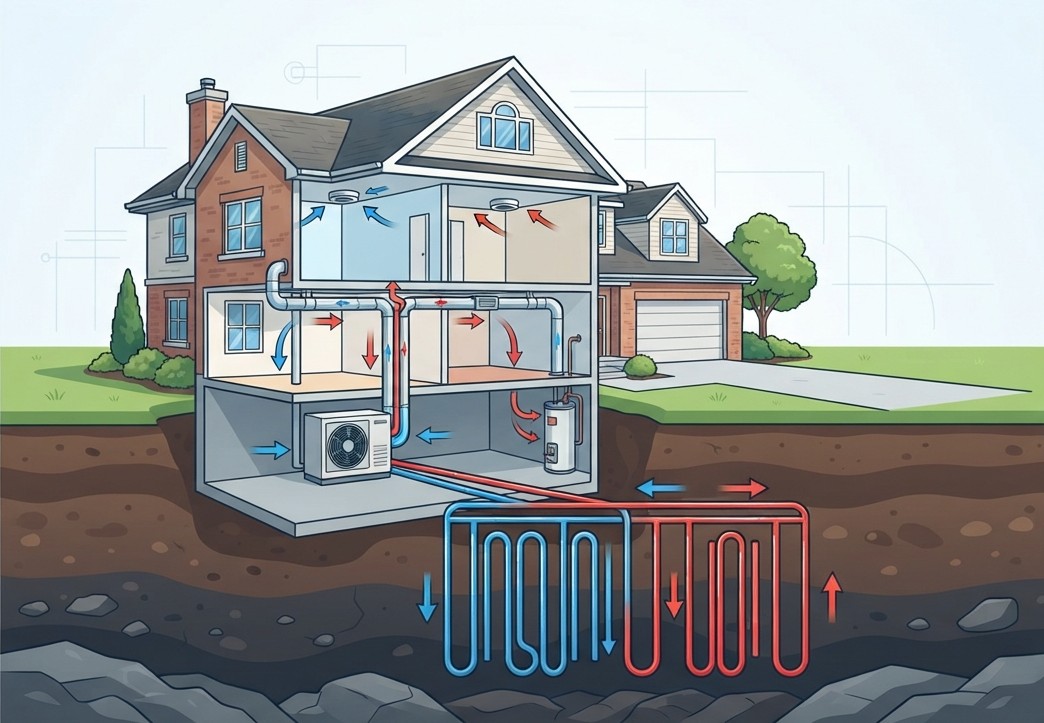
A geothermal system uses the stable temperature below the ground to heat and cool your home year-round. Greenwell installs, repairs, and services geothermal systems throughout New Albany and Kentuckiana. Homeowners choose geothermal for lower energy consumption, quiet operation, and the convenience of heating and cooling from a single system. Our team provides geothermal system installation, repairs, and maintenance backed by local experience and professional workmanship.
Schedule Online(502) 205-2482Why Choose a Geothermal System for Your Kentuckiana Home?
Geothermal systems offer several advantages over traditional HVAC equipment.
- Lower heating and cooling costs
- Consistent indoor temperatures
- Quiet operation
- Reduced dependence on fossil fuels
- Long equipment lifespan
Many geothermal systems operate for 20 to 25 years or longer, while underground loop systems can last significantly longer. Because the earth maintains a relatively stable temperature throughout the year, geothermal equipment operates under less strain than conventional systems.
Homeowners researching long-term HVAC solutions are often attracted to available federal tax incentives and reduced utility costs.
How does Geothermal Heating & Cooling Work?
A geothermal system uses a series of buried pipes called a ground loop to exchange heat with the earth. Underground temperatures remain relatively stable throughout the year, generally ranging between 50°F and 60°F.
During winter, the system transfers heat from the ground into the home. During summer, it removes heat from the home and transfers it back into the ground.
One geothermal system handles both your heating system and cooling needs, eliminating the need for separate heating and air conditioning equipment in many homes. Geothermal works similarly to a heat pump, but it exchanges heat with the ground instead of outdoor air.
Professional Geothermal Installation Services in Kentuckiana
Every geothermal project begins with a property evaluation. Greenwell assesses the home's heating and cooling demands, available land, soil conditions, and loop placement options before recommending a system.
Installation typically includes:
- Site evaluation
- System sizing and design
- Ground loop installation
- Indoor equipment installation
- System testing and startup
Most geothermal installations take between three and seven days depending on property conditions and system design.
After installation, Greenwell verifies system performance and reviews operation with the homeowner.
Schedule service online to request a consultation and discuss geothermal options for your property.
Geothermal Repair & Maintenance Services in Kentuckiana
Like any HVAC equipment, geothermal systems require periodic service.
Common issues include:
- Reduced heating output
- Reduced cooling performance
- Thermostat problems
- Circulation issues
- Unusual noises
- Loop pressure concerns
Routine maintenance helps identify developing issues before they affect system performance. Geothermal repair in New Albany is frequently related to aging components, controls, or circulation equipment rather than the underground loop itself.
Greenwell services geothermal systems throughout the Kentuckiana region and provides support when system problems require prompt attention.
How much does a Geothermal System Installation Cost?
The cost of a geothermal installation depends on the property, system size, loop design, site conditions, and installation requirements.
Projects can vary significantly because every home has different heating and cooling demands. Factors such as available yard space, horizontal versus vertical loop design, and existing HVAC infrastructure all influence the final investment.
Many homeowners compare geothermal installation costs against long-term energy savings, equipment lifespan, and available tax incentives. Financing options may also be available depending on the project.
The best way to understand cost is through a site evaluation and customized estimate.
When does a Geothermal System Make Sense for a Home in Kentuckiana
Geothermal systems are a strong fit for several types of properties.
- Homes with high utility costs benefit from the reduced operating costs associated with geothermal heating and cooling.
- New construction projects and major renovations provide an opportunity to install ground loops before landscaping and site work are complete.
- Properties with available yard space are often good candidates for geothermal because horizontal and vertical loop systems require room for installation.
- Homeowners interested in reducing dependence on traditional fuel sources frequently choose geothermal as a long-term solution.
A geothermal system also deserves consideration when an aging furnace and air conditioner are approaching replacement. Replacing both systems with a single geothermal solution can simplify future heating and cooling needs.
Schedule Your Geothermal System Installation Today with Greenwell
Greenwell installs and services geothermal systems for homeowners throughout Southern Indiana and the Louisville metro area. Visit our service area page to see the communities we serve.
If you're exploring geothermal heating and cooling for a new home, replacement project, or major renovation, Greenwell can help determine if the technology is the right fit for your property.
Schedule service online or call today to request your geothermal consultation.
Schedule Online(502) 205-2482Frequently Asked Questions
Indoor geothermal equipment commonly lasts 20 to 25 years or longer. Ground loop systems often remain in service for decades beyond that.
Not always. Horizontal loop systems require more space, while vertical loop systems can work on smaller properties.
In many homes, yes. A geothermal system can provide both heating and cooling from a single piece of equipment.
Federal tax incentives have been available for qualifying geothermal installations. Incentive programs can change, so homeowners should review current requirements and eligibility details.
Most projects take between three and seven days, depending on site conditions, loop design, and project scope.





Why Choose Greenwell Plumbing, Heating & Air